The Letterbook — a new place to publish online

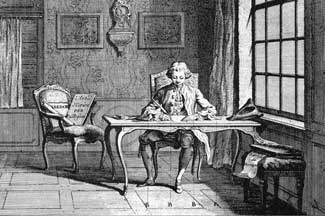
Man writing at a desk

Planches de l'Encyclopédie, 1762–1772.

Before the photocopier and the personal computer, letterbooks were the normal method of keeping a record of correspondence, copied laboriously by hand. From the 17th to the 19th centuries, letterbooks can provide the only surviving record of letters long since lost or destroyed. For example, letters in Electronic Enlightenment come from the letterbooks of the earl of Shaftesbury, the archbishop of Dublin William King, the Swiss banker Toussaint Pierre Lenieps and others, as well as the institutional letterbooks of the Virginia State Executive and the Royal Society in London.

The Letterbook will provide a space for e-journal publication of documents and studies fully linked to the letters and lives in EE. With its rich network of letters and lives, EE offers scholars a unique opportunity to edit letters and publish them online within their original historical context, linked to extensive biographical, geographical and historical information.

Peer-reviewed publication

The Letterbook will have an academic editorial board which will vet all submissions, thereby moving digital publication in the humanities into peer-reviewed accreditation.

Three kinds of publication

The Letterbook will accept submissions in three main epistolary areas:

It will also consider pedagogical studies on letters in the classroom.

readers : librarians : subscribers : contributors : contact us